
Cortisol: The Hidden Link Between Stress, Pain, and Physical Decline
- Sonny Wilson
- Dec 22, 2025
- 3 min read

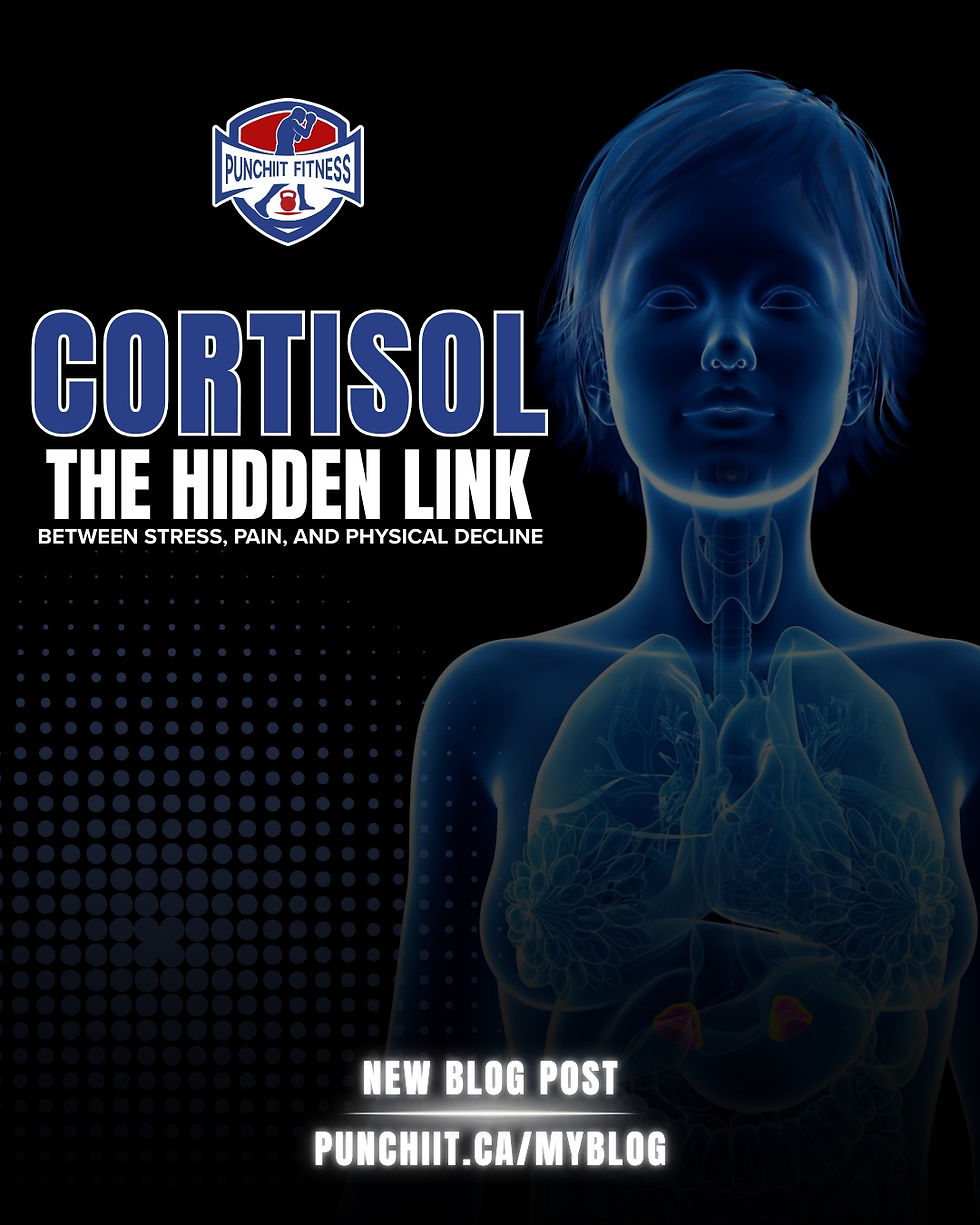
When most people think of stress, they picture racing thoughts, poor sleep, or constant worry. But stress doesn’t just live in your head—it lives in your body too. At the center of this connection is cortisol, often called the “stress hormone.” While cortisol is essential for survival, when it stays elevated for too long it can quietly chip away at your health, setting the stage for chronic pain, weakness, mobility issues, and even bone loss.
What Is Cortisol?
Cortisol is produced by your adrenal glands and is vital for energy, alertness, and your body’s “fight or flight” response. In short bursts, cortisol is helpful—it helps regulate blood sugar, reduce inflammation, and give you the stamina to respond to challenges.
The problem arises when stress is constant. When cortisol levels remain high for weeks, months, or years, the hormone that once protected you starts to cause harm.
Cortisol and Chronic Pain
High cortisol has a direct impact on inflammation. Initially, cortisol can dampen inflammation, but over time, your body can become less responsive to it. This “cortisol resistance” may actually lead to higher levels of inflammation, fueling conditions like arthritis, fibromyalgia, and general muscle and joint pain. Chronic inflammation is one of the strongest predictors of long-term pain.
Cortisol and Mobility Issues
Prolonged cortisol elevation can damage connective tissues and reduce collagen production. This weakens tendons, ligaments, and cartilage, increasing your risk of injuries and making recovery slower. On top of that, stress often alters movement patterns—you tense your shoulders, clench your jaw, or adopt shallow breathing—which can compound stiffness and limit mobility over time.
Cortisol and Muscle Weakness
Cortisol has a catabolic effect, meaning it breaks down muscle tissue to release energy. While this is useful during emergencies, long-term muscle breakdown leads to weakness, reduced endurance, and impaired recovery from exercise or injury. If you’ve ever felt like no matter how much you train you’re not getting stronger, unchecked stress might be part of the reason.
Cortisol and Bone Loss
Perhaps one of the most overlooked effects of high cortisol is its impact on bone density. Chronically elevated cortisol interferes with bone-building cells (osteoblasts) and speeds up bone breakdown (osteoclast activity). Over time, this increases the risk of osteoporosis and fractures, especially in post-menopausal women or individuals under prolonged stress.
Breaking the Cycle
The good news is that cortisol is highly responsive to lifestyle changes. Strategies that can help bring cortisol back into balance include:
Prioritizing sleep: Deep, restorative sleep lowers cortisol and supports tissue repair.
Strength training: Lifting weights helps preserve muscle and bone density, countering cortisol’s catabolic effects.
Breathwork & meditation: Slow breathing and mindfulness practices lower cortisol levels within minutes.
Balanced nutrition: Adequate protein, healthy fats, and micronutrients like magnesium and vitamin D support recovery and hormone balance.
Community & connection: Social interaction buffers the stress response and lowers cortisol naturally.
Final Thoughts
Cortisol isn’t the enemy—it’s a survival tool. But in today’s world, where stress rarely lets up, many of us are living in a state of cortisol overload. Left unchecked, it contributes to chronic pain, mobility problems, weakness, and bone loss. The first step is awareness: by recognizing the physical impact of stress, you can start making small but powerful shifts to restore balance and reclaim your health.


Comments